
The Louisiana Public Records Law
Public access starts with the Louisiana Public Records Law in Title 44 of the Revised Statutes. Under La. R.S. 44:1, public records are defined broadly to include books, records, writings, maps, photographs, recordings, and other documentary material used in public business. That broad definition is the base for most parish and state agency requests.
The right to look at those records sits in La. R.S. 44:31, which lets any person of the age of majority inspect, copy, or reproduce public records, subject to exceptions. The full Public Records Law is set out in the Title 44 table of contents on the legislature site.
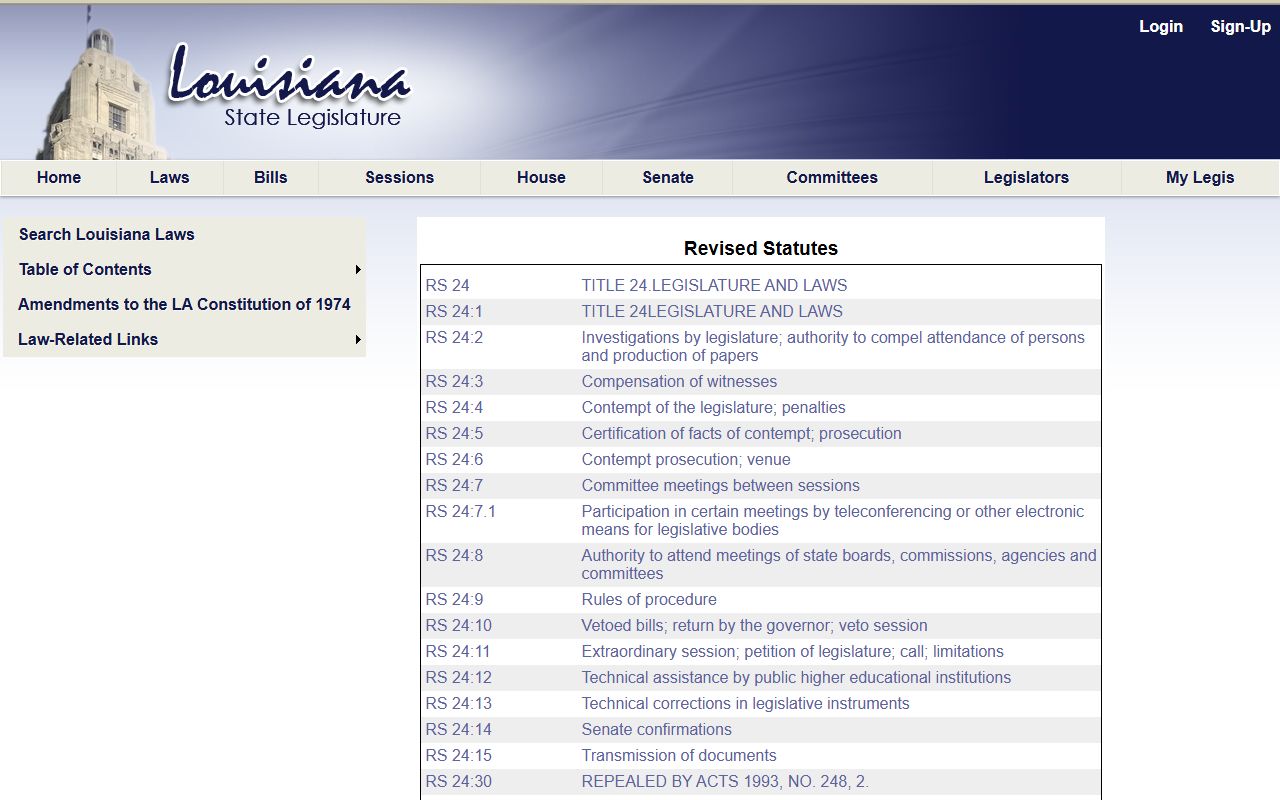
The statute is the anchor, but it works alongside agency rules and confidentiality laws. A record can be public yet still need a fee, a written request, or a redaction.
Records the Clerk of Court Maintains
The parish Clerk of Court is the main local custodian for many official records. Beyond court files, the Clerk holds recorded land records that drive property ownership in Louisiana. These include deeds, mortgages, cancellations, liens, maps, and UCC financing statements, kept by the Recording Department.
The Clerk also holds marriage records, civil and succession filings, and criminal court records by department. A person searching for "court records" may actually need a recorded judgment, a mortgage cancellation, or a deed. The Clerk of Court page breaks down each department and what it keeps.
- Deeds, mortgages, and conveyance records.
- Liens, cancellations, and UCC filings.
- Recorded judgments from civil and succession cases.
- Marriage licenses and recorded marriage certificates.
Sheriff, Court, and Agency Records
Other custodians hold their own public records. The Sheriff keeps booking and jail data, searchable through the inmate records portal. The 19th JDC and the Clerk hold court files. The City-Parish government keeps council, budget, and department records.
Law-enforcement records carry a special rule. Under La. R.S. 44:3, certain pending investigative and prosecutorial materials are protected, while specific booking and initial report information often stays available. Route your request to the agency that created the record.
How to File an East Baton Rouge Parish Public Records Request
A clear request gets a faster answer. Name the custodian, describe the record, and give a date range when you can. You do not always need a form, but a written request creates a record of what you asked for and when.
- Identify the custodian that holds the record, such as the Clerk, the Sheriff, or a City-Parish department.
- Write a short request that describes the record, a date range, and your contact information.
- Send it to the custodian by the method the agency accepts, such as in person, by mail, or online.
- Ask about copy and certification fees before the agency starts the work.
- Keep a copy of your request and any written response for your records.
The custodian's duty to present records appears in La. R.S. 44:32, shown on the legislature site below.
That section frames how copying and certification work once the agency locates the record.
What to Include in a Records Request
A request does not need legal language, but it should give the custodian enough to find the file. The fields below help any agency act on your request without a follow-up call.
| Field | Type | Required | Notes |
|---|---|---|---|
| Requester name | Text | Yes | Must be a person of the age of majority. |
| Contact information | Text | Yes | Mail, email, or phone for the response. |
| Record description | Text | Yes | Describe the record clearly; include a case or instrument number if known. |
| Date range | Date | Optional | Narrows the search and lowers cost. |
| Copy or inspection | Choice | Optional | State whether you want to inspect or receive copies. |
Fees and Response Times
Fees usually tie to copies, certification, and media. The custodian can charge reasonable costs allowed by statute. Court copies and Clerk certifications follow the Clerk's fee schedule. The table groups the common charges; exact amounts come from the custodian.
| Item | Amount |
|---|---|
| Plain copies | Per page; set by the custodian |
| Certified copies | Per page plus certification; set by the Clerk |
| Recorded land records | By page count and indexing; see Clerk fee schedule |
| Media or large requests | Reasonable costs allowed by statute |
Agencies may need reasonable time to find, review, and redact records under La. R.S. 44:33. A record in active use or storage may take longer to produce.
Redactions and Protected Data
Even an open record can come with redactions. Custodians black out social security numbers, financial account numbers, and dates of birth before release. Victim addresses, minor names, and medical data are protected. A redacted record is still a public record; the agency simply removed the parts the law shields.
Privileged and proprietary material gets the same care. Attorney work product is not public just because an agency holds it, and trade-secret filings can be sealed or redacted in civil matters. If you need a record without redactions, that usually takes a court order, not a public-records request.
Common East Baton Rouge Parish Public Records Requests
People ask for many kinds of parish records. The most common requests fall into a few groups, and each routes to a different custodian. Matching the request to the right office is the single biggest time saver.
- Property and title records, from the Clerk Recording Department.
- Booking and jail data, from the Sheriff's inmate portal.
- Court case documents, from the Clerk by case number.
- Marriage records, from the Clerk Marriage Department.
- City-Parish budget, council, and department records, from the City-Parish government.
For the records that overlap with court files, the Clerk of Court and court records pages explain how to pull and certify them.
Exemptions and Denials
Not every record is open. Juvenile, adoption, sealed, and grand jury records are restricted. Active investigative files, medical data, and protected victim information may be withheld or redacted. A custodian can deny a request, usually in writing, when the law shields the record.
If you get a denial you think is wrong, you can ask the custodian to explain the legal basis, and Louisiana law allows court enforcement of public-record duties. For contested denials, talk with counsel or a legal-aid provider. The court records page covers sealed and confidential court files in more detail.
Public-record disputes can move to court when a custodian and a requester disagree. Louisiana courts and the Attorney General have weighed in on these duties over the years. Still, the fastest fix is often a clearer request, a narrower date range, or the right custodian, since many denials trace back to a vague or misdirected ask.
Note: A written denial should cite a legal basis; keep it, since it matters if you later seek review of the custodian's decision.