
How to Find East Baton Rouge Parish Arrest Records
The fastest way to find a recent arrest is the East Baton Rouge Sheriff's Office inmate portal. It shows people in current custody with a mugshot, arrest date, name, race, sex, and the charges behind the hold. The portal lets you filter by name, race, sex, and an in-custody date, and that date is limited to the past 7 days.
Have the person's name ready, and try spelling variants. The portal returns current custody, not a full arrest history. For an older arrest or a closed case, you will need the court file from the Clerk.
- Open the EBRSO inmate portal and enter the name.
- Set the in-custody date within the past 7 days if prompted.
- Open a matching record to see the mugshot, arrest date, and charges.
- Note the statute citations and bond information shown for each hold.
- For the full case, search the court file through the Clerk by name or case number.
The roster details, search fields, and sample inmate fields are covered on the inmate records page.
Booking Data and Mugshots
After an arrest, a person may be transported to Parish Prison, searched, medically screened, booked, photographed, and entered into the jail system. The public portal updates enough to show custody and charges, but it is not the criminal court docket. A booking image, or mugshot, appears for current public custody records.
Charges shown in the roster use Louisiana statute citations. Sample holds have listed offenses such as operating while impaired, drug paraphernalia, and possession charges, each with an arrest date and bond note where it applies. Bond can be cash, surety, recognizance, or a no-bond hold, depending on the charge, the warrant, and the judge.
Important: A mugshot and a booking charge reflect an arrest, not a finding of guilt; the outcome only appears in the court record after the case is resolved.
Arrest Record Versus Criminal Court Record
An arrest record and a criminal court record are two different files from two different custodians. The arrest and booking data come from the Sheriff. The charges, pleas, and sentence come from the court. One does not replace the other, and they can tell different parts of the same story.
| Feature | Arrest Record | Criminal Court Record |
|---|---|---|
| Custodian | Sheriff's Office | 19th JDC and Clerk of Court |
| Shows | Booking, charges at arrest, bond, custody | Charging papers, pleas, disposition, sentence |
| Where to search | EBRSO inmate portal | ClerkConnect / Clerk Criminal Department |
| Outcome shown | No final outcome | Final disposition and judgment |
For the full case history, use court records and search by name or case number.
Charges Versus Convictions
This is the distinction that matters most when reading an arrest record. A charge is an accusation. A conviction is a finding of guilt by plea or trial. Many arrests never lead to a conviction; charges get refused, reduced, dismissed, or resolved through a program.
| Term | What It Means |
|---|---|
| Charge | An accusation that a person committed an offense. |
| Bill of information | A charging document filed by the prosecutor. |
| Indictment | A charging document returned by a grand jury. |
| Conviction | A finding of guilt by plea or by verdict. |
| Disposition | The final outcome of the charge. |
Criminal history information is governed by La. R.S. 15:587, which controls how criminal history is shared and used. An official background check is a separate product from a court case search or a jail search.
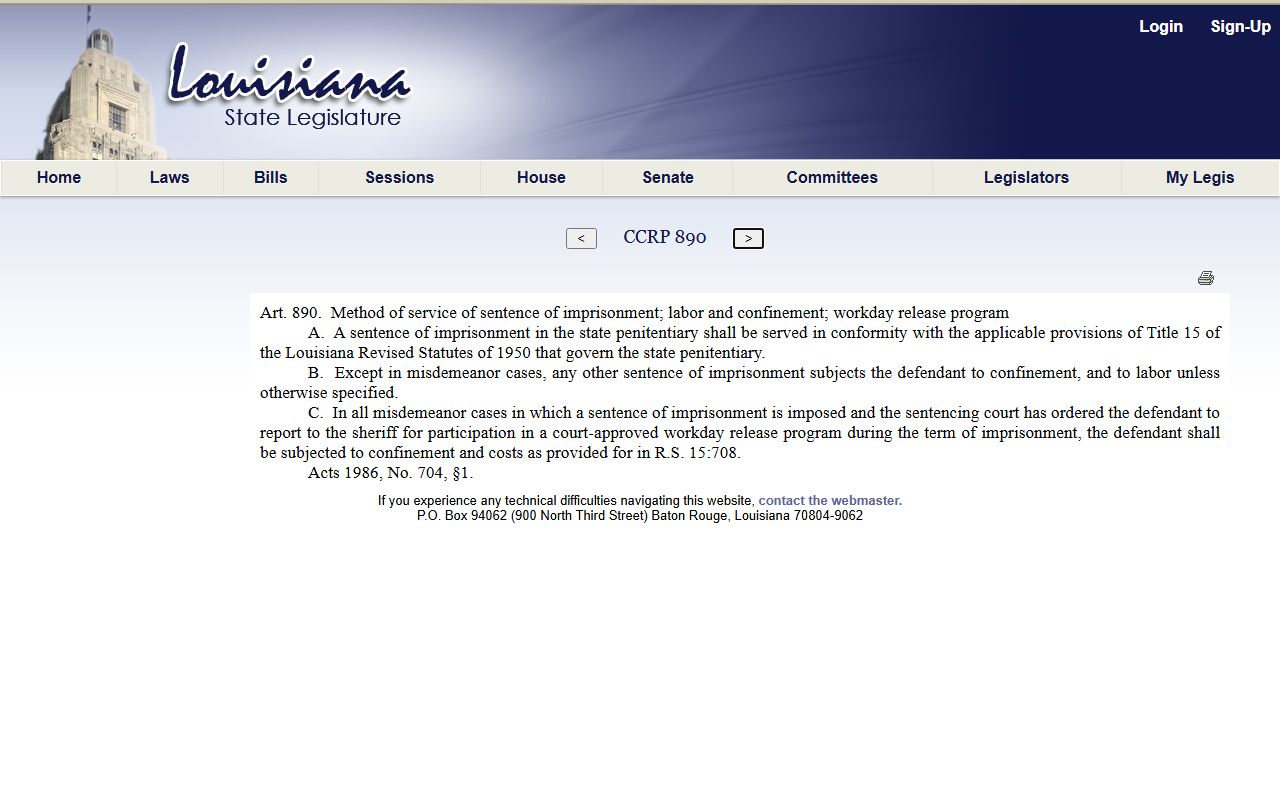
That law is why a private site cannot stand in for an official criminal history check from the proper agency.
Sealed Versus Expunged Records
People often mix up sealing and expungement, but they are not the same. A sealed record is closed to public access by court order or statute. An expunged record is restricted from ordinary public access through a court process; it is not erased from every government database.
| Feature | Sealed | Expunged |
|---|---|---|
| How it happens | Court order or statute | Statutory court process |
| Public access | Closed or limited | Restricted from ordinary public view |
| Agency access | Varies by order | Some agencies may keep access as law allows |
Expungement in Louisiana is set out in the Code of Criminal Procedure. The provisions and limits appear on the legislature site below.
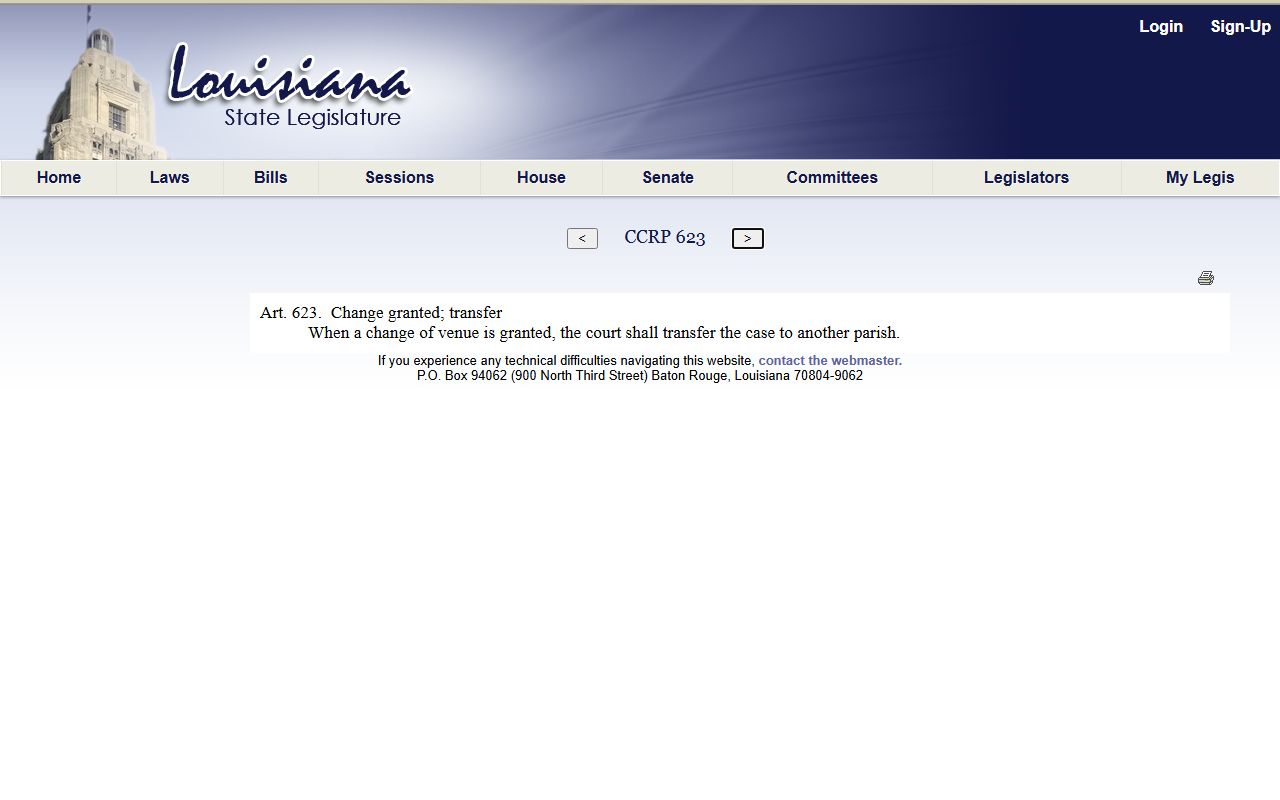
A petitioner files in the court where the arrest or prosecution happened, uses the correct forms, pays the fees unless waived, and notifies agencies such as the District Attorney, the arresting agency, and the Louisiana State Police. Eligibility turns on the result of the case, the offense type, waiting periods, and prior record.
Restricted Criminal Records
Some criminal matters are not open to the public at all. Juvenile records are restricted under the Louisiana Children's Code. Grand jury proceedings are secret except as the law allows. Records tied to active investigations may be withheld under the law-enforcement exception to the Public Records Law.
If a record still shows after an expungement, contact the issuing court, the Clerk, and counsel. The portal that displays a current booking image follows release, sealing, and expungement rules, and third-party mugshot sites are separate and not controlled by the court.
Arrest Records and Background Checks
An online arrest search is not an official background check. A jail roster shows current custody. A court search shows case history. An official criminal history check is a separate product from a state agency, governed by its own rules on who can run it and how it can be used. Employers and licensing bodies follow those rules.
This matters under the Fair Credit Reporting Act. A private records site cannot be used for credit, employment, tenant, or insurance decisions. For those purposes, use the proper channels, since the data shown on a public portal can be incomplete, delayed, or limited to recent custody.
- Jail roster - current custody and booking charges only.
- Court search - charges, pleas, and disposition by case.
- Official criminal history - a separate, regulated product.
How Long Arrests Stay Searchable
The Sheriff's portal focuses on current custody, with an in-custody date limited to the past 7 days. Once a person is released, the booking may drop from the public custody view, even though the court case continues. So a recent arrest can be easy to find one week and harder the next.
The court file is the lasting record. Charges, pleas, and dispositions stay in the court system unless sealed or expunged. To track a case over time, search court records and the docket rather than the jail roster.
Prosecutor and Defense Resources
The East Baton Rouge Parish District Attorney prosecutes state criminal cases, screens charges, and runs victim assistance. A defendant should not contact the DA for legal advice. People who cannot afford counsel should ask the court about appointment and complete the eligibility paperwork.
- East Baton Rouge Parish District Attorney - prosecution and victim assistance.
- Louisiana Public Defender Board - indigent defense for criminal cases.
- Louisiana State Bar legal help - lawyer referral resources.
DUI and DWI matters can route to criminal court and also affect a driver record. See traffic court records for that overlap, and warrant records if a warrant is involved.
Common Arrest Record Questions
A few questions come up again and again when people search arrest data in the parish. Short answers help set expectations before you start.
Can I remove my mugshot from the Sheriff site? The public portal shows booking images for current public custody. Removal depends on release, sealing, expungement, and portal policy. Third-party mugshot sites are separate and not run by the court.
Are police reports the same as arrest records? No. Police reports are law-enforcement records that can be limited while an investigation is open. Arrest data and court files are separate, with their own custodians and rules.
Where is the full criminal case? The full case sits with the 19th JDC and the Clerk, not the jail roster. Search it through court records by name or case number.