
The Family Court of East Baton Rouge Parish
Family Court is a major local court for domestic relations in the parish. It hears divorce, custody, support, paternity, and related matters. Because East Baton Rouge Parish has a high volume of these cases, they are commonly searched apart from ordinary civil and criminal records. The court keeps its own site, judges, and forms.
The court works alongside the Clerk of Court, which holds many filings and issues certified copies. So a family matter may touch both Family Court and the Clerk. The official Family Court site is the place to confirm divisions, judges, and current procedures. Treating Family Court and the Clerk as one workflow, rather than two separate stops, saves time on most cases.
What Family Court Covers
Family Court handles the cases that shape households. The list below shows the main matters that route here rather than to the general civil docket.
- Divorce filings and final judgments.
- Child custody and visitation.
- Child and spousal support.
- Paternity matters.
- Domestic protective-order related matters.
Some of these overlap with the Clerk's records and with marriage records. The marriage and divorce records page covers the divorce process and certified judgments in detail.
How to Find Family Court Records
Start with the case number or the party names. Final divorce judgments may be public, but records involving children, abuse, or sealed pleadings can be restricted. Do not assume every family filing is available online.
- Decide whether the matter is a Family Court case, such as divorce, custody, or support.
- Gather the case number and party names.
- Check Family Court resources and the Clerk's records for filings.
- Request certified copies of a judgment from the Clerk or court custodian.
- Expect restricted access for records involving minors or abuse.
For broader court searches, use court records and the Clerk of Court.
Filing a Divorce in Family Court
A divorce moves through a series of steps in Family Court. Self-represented filers can use the court's official forms, but the rules on grounds, service, and waiting periods are strict. Getting each step right keeps a case from stalling.
- Determine that the matter belongs in Family Court.
- Use official Family Court forms if you are self-represented.
- File pleadings through the Clerk under the local rules.
- Serve the other party unless service is legally waived.
- Attend hearings, mediation, or status conferences as ordered.
- Obtain certified copies of the final judgment from the Clerk.
Custody and support are often decided alongside a divorce, and those orders can be modified later as circumstances change.
Note: Louisiana does not recognize a new common-law marriage formed in the state, and an annulment, based on validity, is different from a divorce that ends a valid marriage.
Custody and Support Records
Custody and support cases make up a large share of Family Court's work. Custody orders set legal and physical arrangements for children. Support orders set who pays and how much. Both can be opened on their own or as part of a divorce.
Records that name or identify children are restricted, so a public search will not show the detail it shows for an adult civil case. A party or counsel can access the file through the proper channels. For certified orders, go to the Clerk or Family Court rather than a portal printout.
Family Court Location and Contact
Family Court sits in the downtown court complex on North Boulevard, on the fourth floor. Bring photo identification and your case number for any visit. The contact card has the details to confirm before you go.
Family Court of East Baton Rouge Parish
300 North Blvd., Fourth Floor
Baton Rouge, LA 70801
225-388-5485
Family Court Judges and Divisions
Family Court has its own bench, with judges assigned to divisions that hear domestic matters. Assignments and full division details can change, so the official Family Court site is the place to confirm the current roster and which division has a case. Reaching the right division clerk helps with calendars and procedures.
Because the court focuses on family law, its judges and staff handle divorce, custody, and support day in and day out. That specialization is part of why these cases are heard here rather than on the general civil docket of the 19th JDC. It also means courtroom staff are used to guiding self-represented parties to the right forms and the right division.
Protective Orders and Domestic Matters
Family Court also touches protective-order related matters. These records can be public in part, but victim addresses, contact information, minors' details, and sealed pleadings are restricted. An active order should be verified through the issuing court or law enforcement, not assumed from an online search.
Domestic matters often move quickly and carry strict deadlines. A party who receives a notice should respond on time and seek help if needed, since missing a date can lead to an order entered without their input. Keeping a current mailing address with the court is important, because a missed notice can mean a missed hearing.
Family Court Forms and Self-Help
Self-represented filers can use official Family Court forms rather than random templates. The court publishes packets for common matters, and legal-aid groups help those who qualify. The public defender does not handle divorce or custody, so family matters usually need civil legal aid or private counsel.
The Louisiana State Bar offers a public legal-help portal and lawyer referral, shown below.
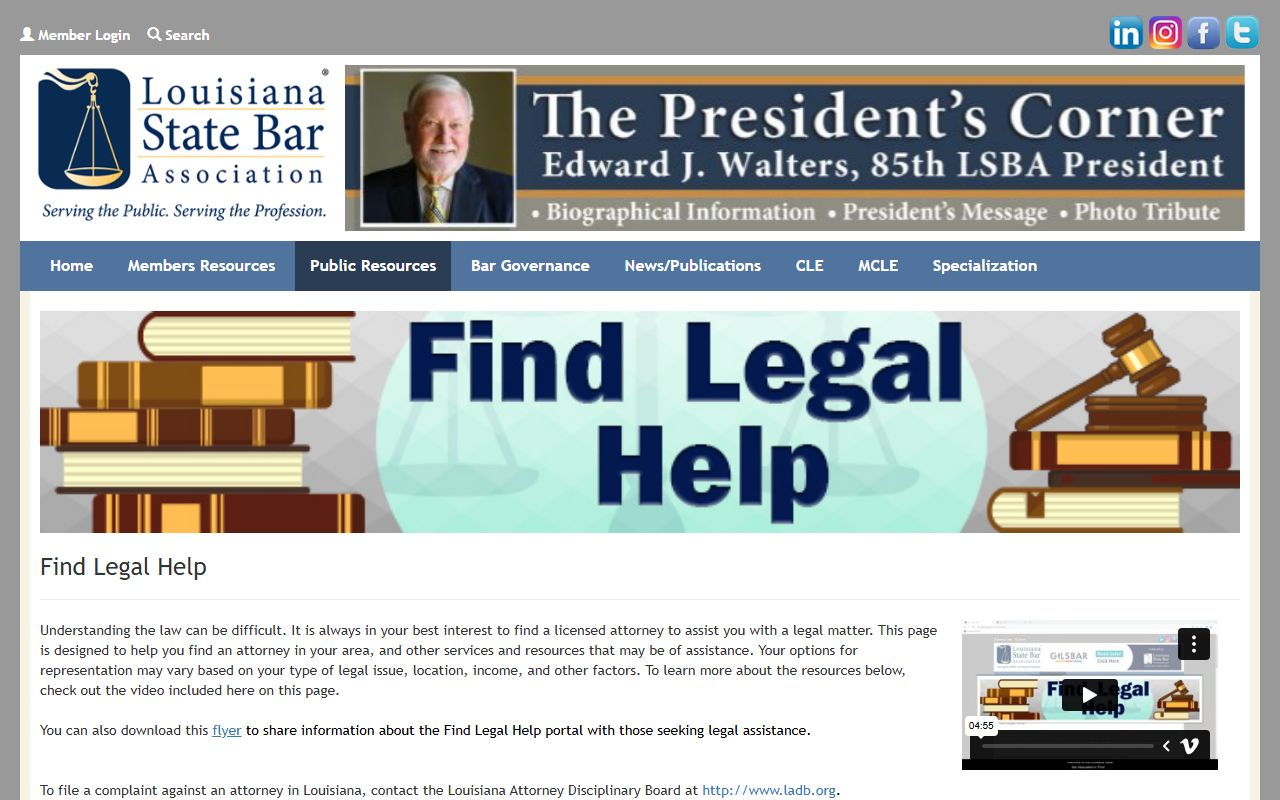
Find help through the Louisiana State Bar, Family Court forms, and Louisiana Law Help.
Restricted Family Records
Family files often hold sensitive material. Records involving children, adoption, abuse allegations, mental health, confidential addresses, social security numbers, and financial account numbers can be redacted or sealed. A final divorce judgment may be public while much of the file is not.
For a certified judgment, go to the Clerk or Family Court rather than relying on a portal image. The court records page explains sealed and confidential files across the parish system.
Note: Records that name or identify a minor are restricted, so a public search will not show juvenile or child-custody details the way it shows an adult civil case.