
How to Look Up East Baton Rouge Parish Jail Population Data
The quickest current count comes from the Sheriff's public inmate portal. A current-custody search returned 1,652 records on May 20, 2026. That figure is a point-in-time portal count, not an audited capacity or average. It rises and falls daily with bookings and releases.
For deeper numbers, official reports and national data sets carry more weight. The Bureau of Justice Statistics, the Vera Institute, and the Prison Policy Initiative publish jail data that puts a single day's count in context. Use the portal for a snapshot and those sources for trends.
The roster itself is searchable through the EBRSO inmate portal, and the inmate records page explains its fields.
East Baton Rouge Parish Jail Capacity Overview
Capacity is a different measure from a daily count. It reflects rated beds or operational limits set by the facility, and it must come from official jail reports or City-Parish budget documents. The current public review did not locate a published per-facility capacity figure, so capacity should be confirmed from those official sources.
| Facility / Unit | Capacity | Source Status |
|---|---|---|
| East Baton Rouge Parish Prison | Confirm from official report | City-Parish and Sheriff documents |
| Work Release | Confirm from official report | Listed as a portal cell block |
| Forensics / Hospital / Court units | Confirm from official report | Internal cell-block labels only |
Until an official capacity is published, comparing the roster count to capacity is not reliable.
Average Daily Population
Average daily population, or ADP, is the mean number of people held over a month or a year. It smooths out the day-to-day swings that a roster count shows. ADP comes from official jail reporting or from research bodies, not from a single portal query.
A point-in-time count and an ADP can differ a lot. A snapshot on a busy booking day overstates a calm week. When you see a parish jail number, ask whether it is a daily count or an annual average before you compare it to anything.
Demographic Breakdown
The public portal does not publish aggregate demographic totals. It does let you filter by race and sex, and result rows display age, so a careful manual review could describe a snapshot. That is not the same as an official demographic report.
For demographic context, national and state research is the better source. The Prison Policy Initiative profiles Louisiana incarceration and breaks down who is held and why. Treat those figures as research, clearly separate from a parish daily count.
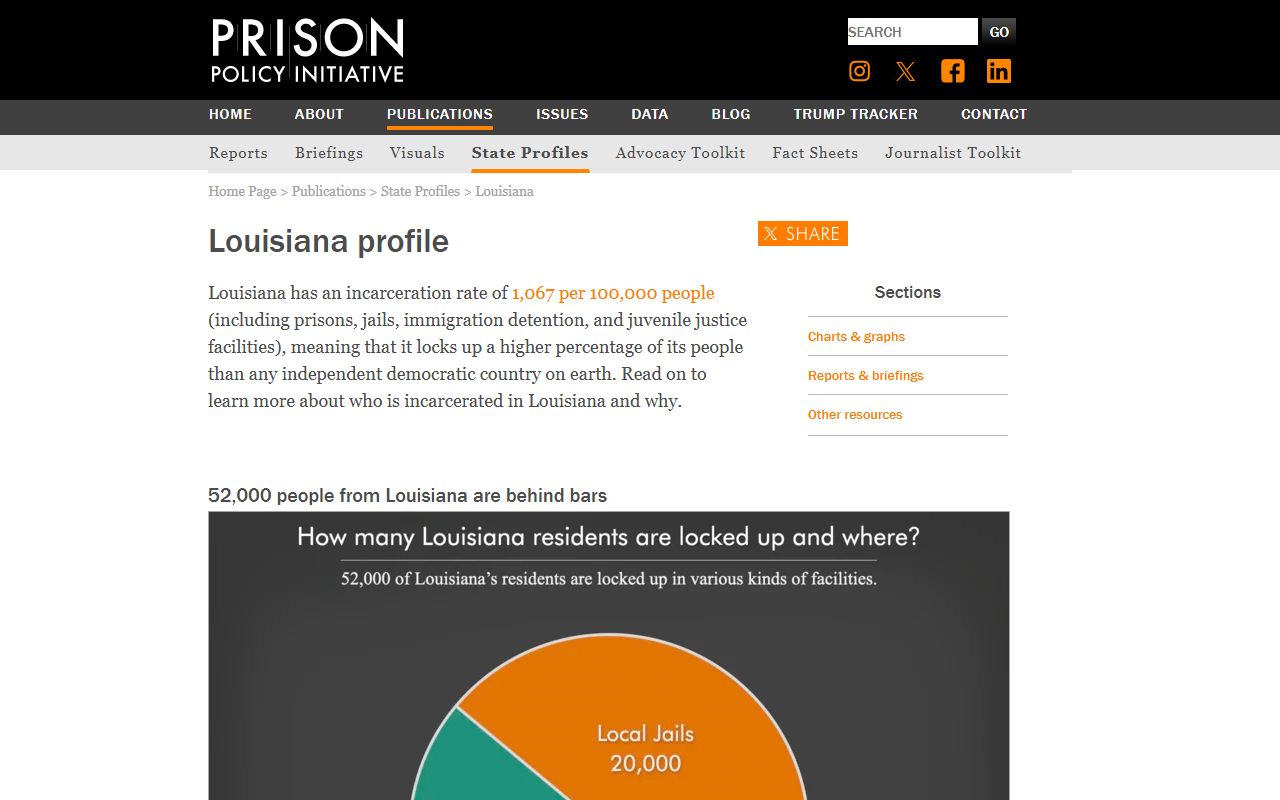
Read the Louisiana profile at the Prison Policy Initiative for demographic context.
Pretrial Versus Sentenced Population
Jail populations split into pretrial and sentenced groups. Pretrial detainees are held while their cases move through court; they have not been convicted. Sentenced inmates are serving a term. The two groups raise different policy questions about bond, speed of cases, and capacity.
| Group | Status | Data Source |
|---|---|---|
| Pretrial | Held while the case is pending | Official jail or justice-system reporting |
| Sentenced | Serving a term after conviction | Official jail or DOC reporting |
The public roster does not publish this split directly, so the breakdown should come from official jail or justice-system reports.
Misdemeanor Versus Felony Population
Charges in the jail range from misdemeanors to felonies. Sample roster holds have shown both, from traffic and minor drug offenses to more serious charges. The mix shapes how long people stay and which court hears the case.
Felony matters move through the 19th JDC, while many misdemeanors and city offenses route to City Court or municipal courts. The roster shows charges per hold, but it does not publish a parish-wide misdemeanor-versus-felony total.
Mental Health and Medical Population
Part of any jail population needs mental health or medical care. The portal setup lists internal units such as Forensics and Hospital, which points to a segment of the population housed for medical or mental health reasons. Public per-unit counts were not located, so the size of that group should come from official jail reporting.
This part of the count drives real policy debate. Mental health in jail, pretrial detention, and care capacity are recurring topics in parish discussions about the jail. National research from the sources below helps frame how common these needs are in county jails.
Jail Reform and Data Gaps
Some numbers simply are not published in one place. Official average daily population, capacity, demographic breakdowns, cost per inmate, and annual bookings were not located in the current public review. Those figures live in City-Parish budget documents, jail dashboards, and council reports.
The honest approach is to flag the gap rather than fill it with a guess. A trustworthy population page tells readers which numbers are confirmed, which are point-in-time, and which still need an official source. That is more useful than a tidy figure with no record behind it.
Agency Holds in the Population
Not everyone in Parish Prison is held for the Sheriff. The portal setup lists holds for the 19th JDC, Baton Rouge Police, City Court, the Department of Corrections, the U.S. Marshals, ICE, Louisiana State Police, and other agencies. Some inmates are held for probation or parole.
This matters for population analysis. A parish jail can house state, federal, and other-agency holds, so the local count includes people the parish did not arrest. The released inmates page explains how those holds affect release.
National and State Context
National data helps frame a local number. The Bureau of Justice Statistics reports on jails nationwide, and the Vera Institute tracks county-level incarceration trends. Louisiana has long ranked high in incarceration, which these sources document. The comparison below shows what each level measures.
| Level | Source | What It Measures |
|---|---|---|
| Parish snapshot | EBRSO inmate portal | Point-in-time custody count |
| State | Prison Policy Initiative, DOC | Statewide incarceration rate and profile |
| National | Bureau of Justice Statistics, Vera | Jail rates and trends per 100,000 |
For national jail statistics, see the Bureau of Justice Statistics and the Vera Institute.
Population Trends Over Time
Jail counts shift with policy and events. After 2020, many jail populations changed because of court disruptions, booking-policy changes, pretrial reform discussions, and case backlogs. A specific five-year parish trend should come from official reports, not from a single snapshot.
East Baton Rouge Parish has had active public debate about jail population, conditions, and pretrial detention. That debate makes sourced, dated figures important. Avoid assigning a numeric trend to the parish without an official table behind it.
Searching for Inmate Records by Name
This page is about population data, not individual lookups. To find one person, the name search lives on the inmate roster, not in these aggregate numbers. Population figures and name searches are different tools.
For a single inmate, use inmate records and the Sheriff's portal. For release status, use released inmates.
Where the Data Comes From
Good population analysis names its sources. The daily count comes from the Sheriff's portal. Capacity and ADP come from official jail and City-Parish reports. State and national context comes from the Prison Policy Initiative, the Vera Institute, and the Bureau of Justice Statistics.
Keep those sources separate. A portal snapshot is current but narrow. A research figure is broader but may lag. Label which is which whenever you cite a parish jail number.
Reading a Parish Jail Number
One number rarely tells the whole story. A snapshot of 1,652 on one day says nothing about the trend, the capacity, or who is held and why. To use a jail number well, ask three questions: what does it measure, when was it taken, and where did it come from.
That habit guards against common mistakes. A daily count is not capacity. A research average is not today's count. Holds from other agencies inflate a local figure. With the right framing, the parish jail number becomes a useful data point instead of a misleading headline.