
Louisiana Successions and East Baton Rouge Parish Probate
Louisiana uses the word succession for what other states call probate. A succession is the legal process of transferring a deceased person's property to heirs. These files are filed in the 19th Judicial District Court and held by the Clerk of Court. There is no separate probate court here; the Clerk and the district court handle it together.
Succession files can include petitions for possession, judgments of possession, wills, oaths, affidavits of death and heirship, inventories, descriptive lists, accountings, and creditor notices. The mix depends on whether there is a will and whether the estate needs an administration.
How to Search East Baton Rouge Parish Probate Records
Start with the Clerk's ClerkConnect portal and search by the decedent's name or the succession case number. An exact case number is the cleanest lookup. A name search can return several matches, so try variants and add a filing date when you can.
| Field | Type | Required | Notes |
|---|---|---|---|
| Decedent name | Text | Optional | Search first and last name and variants. |
| Succession / case number | Text | Optional | The best exact lookup. |
| Filing date range | Date | Optional | Narrows results. |
| Representative name | Text | Optional | Executor, administrator, heir, or creditor. |
Search the portal at ClerkConnect. The filing and record framework sits in the Louisiana Code of Civil Procedure, shown below.
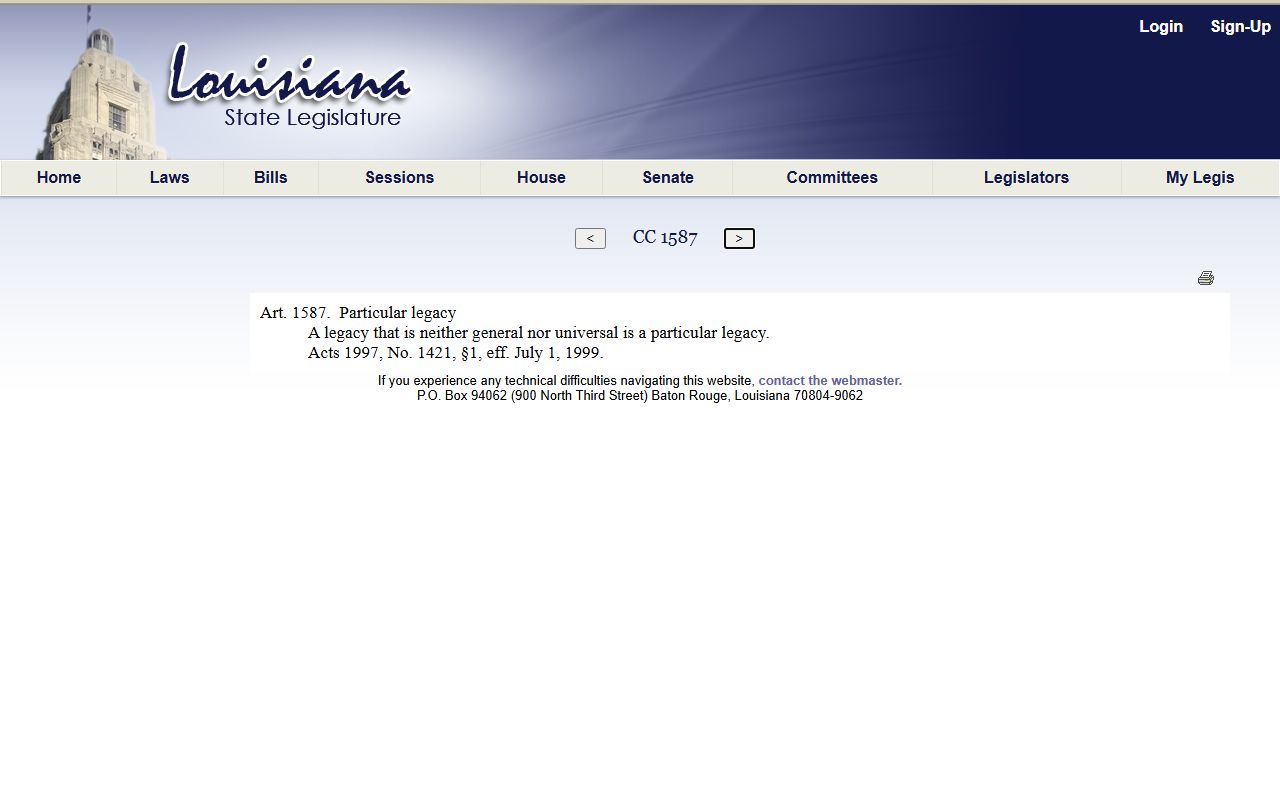
The Code of Civil Procedure provisions support how pleadings and records are filed and kept.
Wills and Judgments of Possession
The will and the judgment of possession are the documents most people look for. A will sets out how the decedent wanted property distributed. A judgment of possession is the court order that places heirs or legatees in possession of the property. When real estate is involved, that judgment is often recorded in the mortgage and conveyance records.
Other key documents round out the file. Letters testamentary or letters of administration appoint the person who manages the estate. Inventories and descriptive lists show the estate's assets. Accountings track what the representative did with the property.
Probate Terms to Know
Probate language can be confusing, especially because Louisiana uses civil-law terms. The list below defines the words you will meet most often in a succession file.
- Succession
- Louisiana's process for transferring a deceased person's property.
- Executor
- The person named in a will to administer the estate.
- Administrator
- The person appointed to administer an estate with no executor.
- Judgment of possession
- The order placing heirs or legatees in possession of property.
- Interdiction
- A proceeding about an adult's capacity and decision-making.
- Intestate
- Dying without a valid will.
How a Succession Works
A succession follows a general path, though the details depend on the estate. Small estates may qualify for simplified procedures, but legal advice is often worth getting. The steps below give the usual shape of the process.
- Decide whether a succession is needed for the estate.
- Gather the will, death certificate, asset list, and heir and creditor information.
- File the right petition in the 19th JDC through the Clerk.
- Present a will for probate and appoint a representative if needed.
- File an inventory or descriptive list if required.
- Address debts, taxes, and creditor notices.
- Obtain the judgment of possession and record it if real estate is involved.
Where to File and Get Copies
Successions are filed and copied at the Clerk of Court in the downtown court complex. Certified copies of judgments, wills, and letters must come from the Clerk, not from a portal printout. Use the contacts below to file or request copies.
Probate Filing Fees and Copies
The Clerk charges for succession filings and for copies. Exact amounts come from the current Clerk fee schedule, so the table groups the charges rather than fixing prices. A certified judgment costs more than a plain copy.
| Item | Amount |
|---|---|
| Succession filing | By filing type; see Clerk Suit Accounting |
| Certified copy of judgment | Per page plus certification; set by the Clerk |
| Plain copies | Per page; lower than certified copies |
| Recording a judgment of possession | By page count; see Clerk Recording fees |
Small Successions and When One Is Needed
Not every estate needs a full court succession. Louisiana allows simplified procedures for some small estates, which can save time and cost. Still, deciding whether a succession is needed, and which kind, often calls for legal advice, since the answer depends on the assets, the heirs, and whether there is a will.
Real estate usually forces the issue. When a decedent owned property, a judgment of possession is typically needed to clear title and let heirs sell or transfer it. That judgment is then recorded in the parish conveyance records so the chain of title stays clean.
Public Access to Succession Files
Succession files are generally public, like other court records, under the Louisiana Public Records Law. You can search the index and, in many cases, view filings. But online document images may require an account or a copy purchase even when the index is open.
Certified copies of judgments, wills, and letters come only from the Clerk. A portal image is fine for research but not for legal use. See public records for the broader access framework.
Creditors, Debts, and Notices
A succession is not just about handing property to heirs. Debts and taxes come first in many cases. The estate may need to address creditor claims, give required notices, and settle obligations before property is distributed. That is part of why some successions take time.
The representative, whether an executor or an administrator, manages these duties under court oversight. Accountings show what was paid and to whom. When debts and notices are handled and the judgment of possession is signed, the property passes to the heirs or legatees.
Note: A succession can take months when an estate has real property, unpaid debts, or disputes among heirs, so plan for more than a single court visit.
Restricted Probate Material and Legal Help
Most succession files are public, but some are not. Guardianship and interdiction matters can include confidential medical or personal information. Minor-related material may be restricted. Online images may also require an account or a copy purchase even when the index is public.
Probate can get complicated, and the Clerk cannot give legal advice. For help, use the resources below, and see marriage and divorce records for other family-related filings or court records for the broader system.
- Louisiana Law Help - self-help legal information.
- Southeast Louisiana Legal Services - civil legal aid intake.
- Louisiana State Bar legal help - lawyer referral.