
The Clerk's Role in East Baton Rouge Parish
Louisiana does not split parish records between a county clerk and a district clerk the way some states do. The parish Clerk of Court is the primary custodian for district-court filings and many official public records. Civil suits, successions, criminal minutes, marriage licenses, mortgage and conveyance records, and certified copies all run through the Clerk.
The Clerk's role is broader than court files. Louisiana parish clerks keep the mortgage and conveyance records that drive property ownership, liens, and real-estate transactions. A person searching for "court records" may really need a recorded judgment, a deed, or a mortgage cancellation. The City-Parish government site, shown below, sits alongside the Clerk in the downtown governmental center.
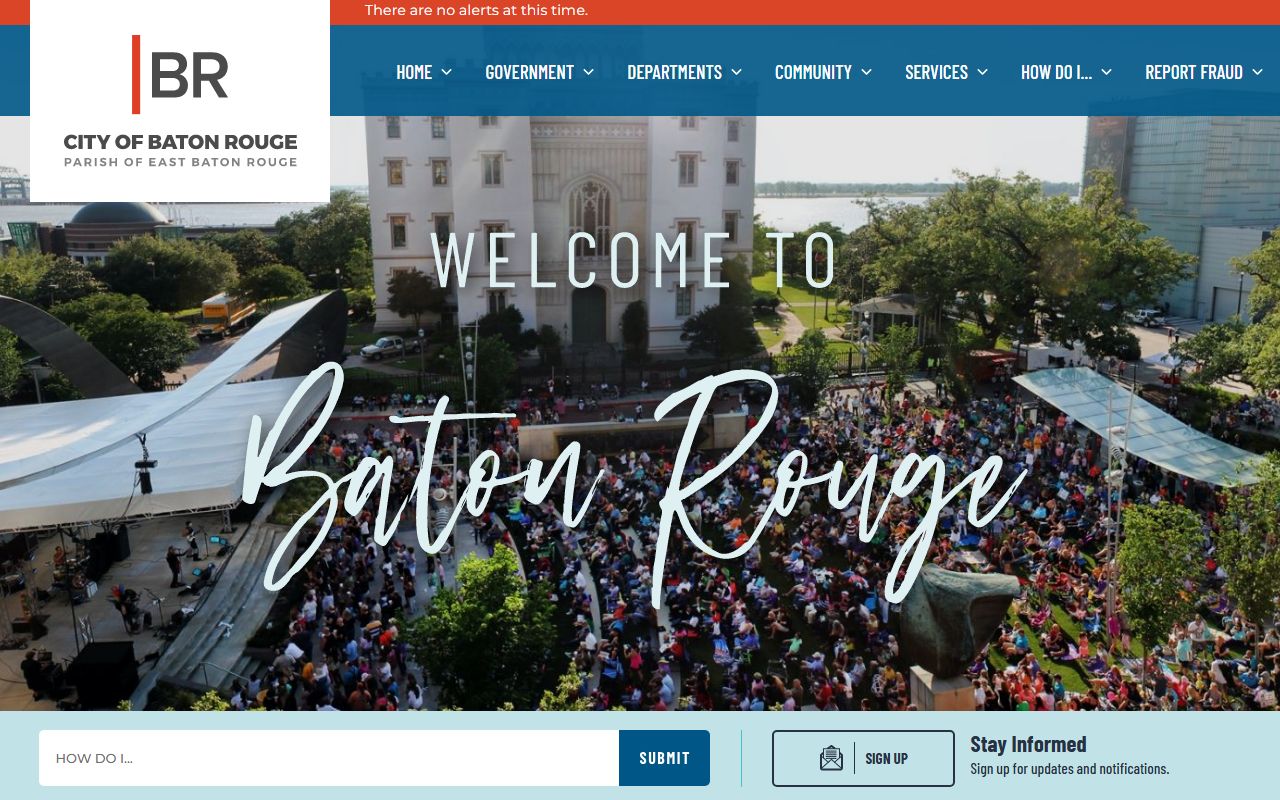
The Clerk's own site at ebrclerk.com is the authoritative source for hours, departments, and services.
Clerk of Court Departments
The Clerk organizes services by department, and each one handles a slice of the record. Knowing the right department saves a wasted trip or call. The list below covers the main offices.
- Recording - mortgage, conveyance, UCC, maps, and marriage records.
- Suit Accounting - civil filing and suit accounting, including successions and costs.
- Criminal - criminal court records, minutes, and related filings.
- Copy - plain copies, certified copies, and copy requests.
- Marriage - marriage licenses and certified marriage records.
- Information Services - the online records environment and technology.
Searching Records on ClerkConnect
ClerkConnect is the Clerk's online portal for court and land records. It lets you search by party name, case number, instrument number, and date, with separate modules for court, mortgage, conveyance, and marriage records. The portal is official, but full document images and certified copies may need an account or a fee.
| Field | Type | Required | Notes |
|---|---|---|---|
| Party / name | Text | Optional | Enter last or business name; spelling matters. |
| Case number | Text | Optional | Use the full number as issued. |
| Instrument / recording number | Text | Optional | Best for recorded land instruments. |
| Date range | Date | Optional | Narrows by filing or recording date. |
| Record module | Tab | Module-specific | Court, mortgage, conveyance, or marriage. |
Open the portal at ClerkConnect, and see court records for a fuller search walkthrough.
How to Request a Certified Copy
A certified copy is the official version of a record, stamped and signed by the Clerk. You need one for most legal uses, since a portal printout is not certified. The Copy Department handles these requests.
- Identify the record by case or instrument number and party name.
- Contact the Clerk Copy Department in person, by mail, or as the office directs.
- State the document type and how many certified copies you need.
- Pay the per-page copy fee plus the certification charge.
- Receive the certified copy with the Clerk's stamp and signature.
Note: Clerk staff can provide records, forms, and fee information, but they cannot give legal advice or choose which form or filing is right for your case.
Clerk of Court Contact and Hours
The Clerk's office sits in the downtown court complex on North Boulevard, sharing the building with the 19th JDC. Bring photo identification, the case or instrument number, and an accepted payment method. The contact card has the office details.
East Baton Rouge Parish Clerk of Court
300 North Boulevard
Baton Rouge, LA 70801
Mon-Fri 8:30 a.m.-4:30 p.m.
Clerk of Court Fee Schedule
The Clerk charges for filings, recordings, copies, and marriage licenses. Exact amounts come from the current fee schedule, so the table groups the fee types rather than fixing prices. Recording fees vary by page count, names indexed, and exhibits.
| Item | Amount |
|---|---|
| Civil filing fees | By pleading type and suit class |
| Certified copies | Per page plus certification |
| Recording mortgage / conveyance | By page count, names, and exhibits |
| Marriage license | Confirm current fee on the Marriage page |
Find the current schedule on the Clerk Fees page, and use the OMV portal for driver records, which are separate from court files.
Clerk Forms and Filing
The Clerk publishes official forms for civil, probate, criminal, copy, and marriage matters. Use the official forms rather than random templates, and confirm whether e-filing is required for your case type. Copy requests generally need case or instrument identifiers and payment.
Self-represented filers should keep file-stamped copies of everything and update their mailing address with the court. The public records page covers open-records requests, and probate records covers succession filings handled by the Clerk.
Note: A missed notice can lead to a missed court date, so keep your mailing address current with the court and the Clerk at all times.
ClerkConnect Access and Account Levels
Online access is not all or nothing. ClerkConnect shows index data to the public, but viewing some document images or buying certified copies can require an account or a fee. The level of access depends on the record type and the module.
Plan around that. Use the public index to find a case or instrument, then decide whether you need a full image or a certified copy. Older records, sealed material, and records not imaged online may require a direct department request rather than a portal click.
What Clerk Staff Can and Cannot Do
The Clerk is a record office, not a law office. Staff can search records, accept filings that follow court rules, record instruments, issue copies, and explain fees. They cannot tell you which form to file, draft a pleading, or say whether a filing is legally sufficient.
That line matters for self-represented filers. For legal advice, use a lawyer or a legal-aid provider. For official forms, use the Clerk and Family Court form libraries rather than random templates.
- Can do - search records, accept filings, record, copy, explain fees.
- Cannot do - give legal advice, choose forms, or draft pleadings.
Recording Land and Property Records
The Recording Department is one of the busiest parts of the Clerk's office. Louisiana property practice runs on recorded instruments, so deeds, mortgages, cancellations, liens, maps, and UCC filings all pass through here. A recorded instrument creates the public chain of title that lenders, buyers, and title companies rely on.
Recording fees vary by page count, the number of names indexed, and any exhibits. To pull a recorded document, search by instrument number, recording date, or the grantor and grantee names. A recorded judgment of possession from a succession is filed here when real estate is involved, which ties probate work back to the land records.